Liberals Spring Economic Update 2026

The Carney government tabled its 2026 spring economic update today. The headlines are friendly. The math is messier. Here’s what’s in it — and what a sovereign Canadian should actually do about it.

BY SOVEREIGN CANADIAN·APRIL 28, 2026·10 MIN READ

The Short Version

The Liberals walked into the House of Commons today carrying what they called “good news.” Finance Minister François-Philippe Champagne tabled the Spring Economic Update 2026 — Carney’s first since flipping the budget calendar and moving the main budget to fall. The backdrop is chaotic: a U.S.-Israel war on Iran has choked off the Strait of Hormuz, oil prices are surging, the trade war with the United States is still grinding, and Carney now has a majority government after sweeping three April byelections. He’s not asking permission anymore.

The headline: the deficit is coming in lower than projected. The fine print: it’s still a deficit. And they’re already planning to spend the savings before you can blink.

KEY MEASURES AT A GLANCE

  • Deficit for 2025-26 projected to come in well below the $78.3B forecast
  • Canada Strong Fund — a new $25B sovereign wealth fund for “nation-building”
  • Federal fuel excise tax paused until Labour Day (saving ~10¢/litre on gas, 4¢/litre on diesel) at a cost of $2.4B
  • GST benefit boost for lower-income households, landing in June
  • One-time grocery benefit arriving in July
  • Foreign direct investment outpacing all other G7 economies (per Carney)
  • Non-U.S. exports up significantly, with trade diversification accelerating
  • Bank of Canada rate decision due tomorrow (currently 2.25%)

The Fiscal Picture: Better Than Projected, Worse Than You Think

Let’s start with the number everyone’s watching. Carney’s November budget projected a deficit of $78.3 billion for the fiscal year that just ended March 31. The fiscal monitor through February showed the deficit sitting at $25.5 billion over the first eleven months — well below the trajectory. March typically blows up the number, but even accounting for that, most analysts expect the final figure to land materially lower than the $78.3B projection.

Carney called this proof that his team are “good fiscal managers.” The opposition called it a lucky break from surging oil revenues tied to the Iran conflict. Both things can be true.

ORIGINAL DEFICIT PROJECTION (2025-26)

$78.3B

Carney’s Nov. 2025 budget forecast

DEFICIT THROUGH FEB 2026

$25.5B

11 months of 12 — well ahead of pace

PROJECTED ANNUAL DEFICIT (5-YR AVG)

$64B

Declining from 2025 budget horizon

CANADA STRONG FUND

$25B

Initial federal contribution — new sovereign wealth fund

What didn’t happen: any credible path to a balanced budget. Poilievre demanded Carney cap the 2026-27 deficit at $31 billion and present a balanced budget timeline. He didn’t get it. The Conservatives are screaming “credit card budgeting.” The Liberals are calling it nation-building. You’re paying interest on all of it either way.

“We were determined to get spending down with a lot of very difficult decisions. You can’t do everything at the same time.”— PM MARK CARNEY, APRIL 27, 2026


The Canada Strong Fund: Sovereign Wealth or Political Slush Fund?

The marquee announcement dropped yesterday, one day before the update: Canada now has its first sovereign wealth fund. The Canada Strong Fund launches with a $25 billion federal endowment. It will invest alongside the private sector in nation-building projects — ports, mines, LNG, critical minerals, trade corridors, energy infrastructure. There’s also a retail investment product planned so everyday Canadians can buy in directly.

Sounds compelling. But there are legitimate questions here that don’t have answers yet.

Norway’s Government Pension Fund — the model everyone cites — is funded by oil surpluses, not borrowed money. The Liberals are launching this fund while running a nine-figure deficit. One economist from the MEI put it bluntly: a sovereign wealth fund should be funded by budgetary surplus, not debt. When the fund makes returns, great. When it doesn’t, Canadian taxpayers absorb it.

The governance structure is also still being designed. “Further details to follow in the coming months” is not a business plan. Fifteen major projects have been referred to the Major Projects Office since September 2025, representing over $126 billion in investments. LNG, nuclear, nickel, graphite, tungsten, transportation infrastructure — these are real assets with real potential. But government-directed capital allocation has a long history of political interference crowding out better private decisions.

Watch this closely. The concept is sound. The execution will determine whether this is Norway’s oil fund or Ontario’s Hydro One. History is not kind to the latter.


Affordability Measures: Relief You’ll Feel, Costs You Won’t See

The Liberals came with a bag of immediate relief items. The federal excise tax on gas and diesel is paused until Labour Day. That’s roughly 10 cents a litre on gasoline saved at the pump. At $2.4 billion in foregone revenue, it’s real money — and it’s the right move given that oil market chaos from the Iran war is squeezing Canadians at the pump.

Also announced: a GST benefit boost for lower-income households landing in June, and a one-time grocery benefit arriving in July. These are targeted at the bottom of the income distribution, which is where the pain is most acute.

Here’s the tension. Every dollar of relief announced is a dollar added back to the deficit — or subtracted from the “better than expected” fiscal position Carney is touting. Champagne acknowledged that “volatility is omnipresent.” He’s not wrong. But you can’t cut the deficit and spend the savings simultaneously. The Liberals are trying to do both, and the update essentially confirms it.


The Macro Backdrop: War, Tariffs, and Trade Rewiring

Context matters. The global economy is in the middle of a significant shock. The U.S.-Israel military action against Iran has effectively choked oil exports through the Strait of Hormuz. Canada is a net energy exporter — that means higher oil prices are a revenue windfall for Alberta and the federal government, even as they punish consumers at the pump. Crude near $100/barrel is the kind of fiscal tailwind that makes deficit numbers look better than the underlying spending discipline would justify.

On the trade front, the U.S. tariff war has accelerated Canada’s export diversification. Non-U.S. exports rose 11.2% in 2025. Canada’s merchandise exports to countries outside the U.S. were 10.9% higher in the second half of 2025 compared to the first. Energy exports to countries other than the U.S. rose 22.3% to $28.8 billion. That is real structural progress, though it started from a high base of U.S. dependence and has a long way to go.

Foreign direct investment into Canada is reportedly outpacing all other major economies — Carney’s framing. The Desjardins take is more measured: Canada remains one of the “cleanest fiscal dirty shirts” among advanced economies, which is a diplomatic way of saying we’re less bad, not actually good. There’s no credit downgrade imminent, but the fiscal trajectory isn’t something to celebrate.

GDP growth was 1.7% for 2025. The slowest since COVID. The Bank of Canada is holding at 2.25%. Business confidence is low. Private sector employment is declining in early 2026. These are not the numbers of a booming economy. They’re the numbers of an economy holding on while the world rearranges itself around it.


What This Means If You’re Building Sovereign Wealth

THE REAL TAKEAWAY

Forget the political theatre. Here’s what this update actually tells you about the environment you’re operating in.

The fuel tax cut is real money in your pocket — but temporary. If you drive for business, own vehicles, manage logistics, or run any operation with fuel costs, Labour Day is your deadline. Plan around it. Use the savings now; don’t build your financial model around them persisting.

Oil is the new X factor. If you hold Canadian energy stocks, REITs with Alberta exposure, or commodities — the Strait of Hormuz situation is your most important variable right now, not the federal budget. The fiscal tailwind for Ottawa comes directly from your fuel bills. This is wealth transfer in real time.

The Canada Strong Fund is worth watching as an investor. If a retail product launches that lets individual Canadians co-invest in LNG terminals, transmission corridors, and critical mineral projects — that is a genuinely interesting asset class. It’s not a registered account trick. It could be real infrastructure exposure at scale. Wait for the design details before getting excited. But don’t dismiss it because Liberals announced it.

Deficits at this scale are inflationary pressure, slowly. Inflation is currently within target (1-3%) — Carney is right about that. But structural deficits averaging $64 billion annually are a long-term currency debasement story. If you’re holding large amounts in Canadian dollars, or long-duration Canadian fixed income, understand what you own. Hard assetsincome-producing real estate, and globally diversified equity are your hedge.

The trade diversification is actually the most important story. Nobody in the media is leading with this, but Canada rewiring its export relationships — less U.S., more Europe, Asia, and emerging markets — is the single biggest structural shift happening in the Canadian economy right now. For business owners, this is a decade-long tailwind if you position into it. For investors, watch the sectors benefiting: LNG, potash, uranium, gold, aluminum.

A majority government changes the legislative risk environment. Carney doesn’t need anyone’s permission anymore. Capital gains inclusion rates, housing policy, investment rules, resource regulations — all of it can move faster. Stay close to what’s coming in the Fall 2026 budget. That’s when the real policy agenda arrives.

SOVEREIGN CANADIAN TAKE

The Liberals walked in today with a smaller deficit and a bag of relief measures. The media will call it a good day for Carney. Maybe it is.

But here’s what doesn’t change: the government spent $25 billion on a wealth fund it doesn’t technically have. It borrowed to cut your gas tax. It projected $64 billion deficits for the next five years. It handed out GST cheques and grocery benefits funded by oil revenues that could evaporate the moment the Strait of Hormuz reopens.

This is not a government that trusts you to manage your own money better than they can. Every benefit, every fund, every cheque is a dependency mechanism. The sovereign move is to note where they’re spending, get out of the way of the opportunity it creates, and build financial structures that don’t require Ottawa’s permission to sustain your family.

The fund you actually control is more powerful than anything Champagne tabled today.


The question isn’t whether the Liberals had a good fiscal day. The question is: what are you doing with the information? The macro environment is clear. The policy direction is known. What’s your move?

Canada Strong Fund: An Introduction

The Canada Strong Fund is Canada’s first sovereign wealth fund — and it just launched. What It Is, What Gets Built, and How You Invest

Carney made the Canada Strong Fund announcement on April 27, 2026, the day before his government’s Spring Economic Update. The fund is designed to give all Canadians a direct stake in the Build Canada agenda, with a mandate to achieve commercial returns and build the wealth of Canada.

Big words. Let’s cut through them.


What the Canada Strong Fund Actually Is

The government seeds the fund with $25 billion over 3 years on a cash basis. That’s the starting capital. The fund grows through investment returns and asset recycling — gains get reinvested rather than spent, and additional government assets can flow in over time. Canada Strong Fund — Official Government Backgrounder

It operates at arm’s length as a new Crown corporation, guided by a CEO and a qualified independent board of directors. Think CPPIB, not a ministerial slush fund. That’s the stated model. Whether it holds to that standard is what you watch for.

The mandate is straightforward: invest in strategic Canadian projects and companies alongside private investors, focused primarily on equity, with a goal of delivering market-rate returns.


What Gets Built: The Canada Strong Fund Project Pipeline

This is where it gets interesting for anyone who actually cares about Canada’s economic backbone.

Since September 2025, 15 projects have been referred and six transformative strategies are in development by the Major Projects Office. The sectors: nuclear, LNG, critical minerals — nickel, graphite, and tungsten — and transportation infrastructure.

The Canada Strong Fund targets major Canadian industrial projects across energy, infrastructure, mining, agriculture, and technology.

Read that list again. Nuclear. LNG. Critical minerals. Transportation. These are the hard assets that create durable national wealth. Not apps. Not subsidies. Real stuff in the ground and in the grid.

Carney’s framing is historically accurate — transformative projects like the CPR, the oil sands, and the Trans-Canada built generational wealth. The question is whether this fund replicates that discipline or becomes a vehicle for politically convenient pet projects.

The Major Projects Office is the gatekeeper. They’re processing the pipeline of candidates, and the government is assessing projects for potential designation under the Building Canada Act, which fast-tracks regulatory approvals. That matters — regulatory gridlock has killed more Canadian resource projects than any shortage of capital ever has.


The Canada Dividend: The Part Nobody’s Talking About Enough

Here’s where it gets philosophically interesting.

Norway’s Government Pension Fund — the gold standard globally — distributes wealth back to citizens over time. Alaska does it annually through the Permanent Fund Dividend. Every Alaskan gets a cheque from oil revenues. Every year. Full stop.

Canada is gesturing in that direction. The government will launch a retail investment product, giving Canadians a direct stake in the nation’s long-term prosperity and a share in the returns.

The key phrase: share in the returns. That’s the Canada Dividend concept, even if they’re not calling it that yet.

The details are still being designed through consultation over the coming months, with additional specifics expected in the Spring Economic Update 2026. What we know conceptually is promising: as the Canada Strong Fund succeeds, investors share in the upside while their initial invested capital is protected.

Principal protection plus upside participation. If that holds, it’s a genuinely interesting instrument.


How Individual Canadians Can Invest in the Canada Strong Fund

This is the part that should matter most to readers of this site. And I’m watching this closely to see if it is a good addition to my RRSP and other investing.

The government will offer Canadians the opportunity to participate directly through a new retail investment product — broadly accessible coast to coast, easy and simple to purchase, hold, and transact.

Carney compared it to a government bond where the initial investment is protected. Think: government-backed capital protection plus direct exposure to the upside of major Canadian industrial projects.

Here’s how to think about it as a sovereign-minded individual investor:

What’s potentially good: Direct exposure to the asset class that has historically built real wealth in this country — energy, infrastructure, critical minerals. Not through some mutual fund with a 2.5% MER skimming your returns. Direct participation. And if principal protection is real, your downside is bounded.

What you need to watch: Design details haven’t been released. “Principal protected” can mean a lot of things. Is it inflation-adjusted? What’s the lock-up period? What fees are buried in the structure? How do you exit? A bond-like structure that protects nominal dollars but erodes purchasing power in a 3% inflation environment isn’t actually protecting you.

The deeper question: Is this RRSP/TFSA eligible? If yes, this becomes a genuinely interesting domestic asset class for investors who want to stop exporting capital to US equities. If no, the tax drag changes the calculus considerably.

None of that is answered yet. The Transition Office will consult on these specifics over the coming months.


The Honest Skepticism

Poilievre’s critique isn’t wrong on its face. Canada is running a projected $78-billion deficit — countries need wealth to have a wealth fund, and this is effectively sovereign debt being recycled into equity investments.

That’s a real tension. Norway built its fund from oil surplus revenues. Canada is building this from borrowed money. The math only works if investments generate returns above the cost of that debt. The C.D. Howe Institute made exactly that point — the fund needs to outperform its financing costs just to break even.

That’s not impossible. But it’s a tighter rope than the announcement language suggests. You need the fund generating 7–9% real returns while financing debt at 4–5% and clearing fees and operational overhead. That requires a genuinely skilled investment team executing equity deals in complex infrastructure. The CPPIB does it. Not every Crown corporation does.


What This Means for the Sovereign-Minded Canadian

The Canada Strong Fund is the most interesting structural development in Canadian finance in a generation. The concept is right — pool national capital, deploy it into hard assets, and create a mechanism for ordinary Canadians to participate in their country’s resource and infrastructure wealth.

The execution will determine everything.

Watch the Spring Economic Update for structural detail. Watch the Transition Office consultation — that’s where the retail product gets designed. And watch which specific projects get funded in the first wave. That tells you whether this is a genuine commercial vehicle or a political instrument wearing a financial suit.

Canada has been exporting its resource wealth for a century. The question was always whether we’d build institutions to capture a bigger share of that value domestically. This is an attempt to answer that question.

Whether it succeeds depends on whether the arm’s-length structure holds under political pressure, whether the investment team is genuinely world-class, and whether the retail product is designed for Canadian savers — not Canadian optics.

Stay tuned. More detail will follow.

Are you considering putting money into the Canada Strong Fund when the retail product launches? Drop it in the comments.

Sources & Further Reading

  1. Canada Strong Fund — Official Government Backgrounder
  2. PM Carney’s Announcement — Prime Minister of Canada
  3. CBC News — Carney announces Canada’s first sovereign wealth fund
  4. BNN Bloomberg — Canada Strong Fund analysis

RRSPs: The Golden Handcuffs of Canadian Retirement

You were smart. You made good money. You used your RRSP to save on taxes.  
And now you’re staring down the barrel of retirement… with a six or seven-figure balance…  
…and a tax bill that’s as bad – or worse – than when you were working.

This is the reality for a lot of upper-middle-class Canadians. They optimized for the front end – the deduction – but never ran the numbers on the back end. RRSPs work for the average earner. They’re far from optimal for someone who actually succeeded financially.

It’s time for us to take a second look – as I’m in this boat right now.

The Setup: Why RRSPs Seem So Smart

– You contribute pre-tax, so you lower your income now  
– Investments grow tax-deferred
– Commonly, you have an employer match  
– You only pay tax when you withdraw in “retirement,” when your income *should* be lower

It makes perfect sense *if* your retirement income drops off a cliff. But what if it doesn’t? What if your lifestyle stays high, your CPP and OAS add to your income, and your withdrawals push you back into a high bracket?

What if you end up paying more tax in retirement than you saved while working?

The Gut Punch: Paying 48% on Money You Saved at 30%

Let’s say you contributed $20,000 a year into your RRSP during your prime earning years and saved 30% in tax. That’s a $6,000 refund you were glad to get.

Fast forward 25 years and your RRSP has ballooned to $800,000 or more.

At age 71, you’re forced to convert it to a RRIF and start pulling money whether you need it or not. The RRIF minimum withdrawal starts at 5.28% at age 71 and increases each year. Those withdrawals? They could easily push you into a 43%-48% marginal tax bracket – especially if your spouse has passed and income splitting is off the table.

You also need to consider the OAS clawback. In 2025, the threshold begins at $90,997 of individual net income. Every dollar above that reduces your Old Age Security benefit by 15 cents. At $148,065, your OAS is fully clawed back. For most upper-middle-class retirees, this means OAS is either reduced or gone entirely.

GIS (Guaranteed Income Supplement) is aimed at low-income seniors. Realistically, if you’re in this audience, you’re never going to see it – and shouldn’t plan on it.

So you saved $6,000 each year for 20 years… and now you’re handing back more than half of every withdrawal to the CRA.

You didn’t beat the system. You just deferred the pain.

What’s the Alternative?

If you’re paying attention – and not just trusting the smiling face at your bank – you’ve got better options. These aren’t one-size-fits-all, but they *do* put you back in control.

Here’s what I’m running through right now:

TFSA  
Same market growth, no tax on withdrawals, no mandatory minimums.  
Ideal for dividend income, U.S. growth stocks, or even bitcoin ETFs.  
Also immune to clawbacks on OAS and GIS in retirement.

Cash investment accounts  
You get taxed on capital gains and dividends, sure – but you control when and how. Capital gains are taxed at 50% of your marginal rate, and you can time when to sell.  
Dividend income from Canadian companies also comes with a dividend tax credit, making it highly efficient in lower brackets. You can also tax-loss harvest when the market dips.

Holding companies and small business tax advantages  
If you own a business – even part-time – you can retain earnings inside a Canadian-controlled private corporation (CCPC).  
Most provinces tax the first $500,000 of active business income at 11%-12.5%, which is significantly lower than personal rates. Those retained earnings can be invested in passive income-producing assets. If structured properly, you can pay yourself through dividends in low-income years, keeping your tax bill highly efficient.

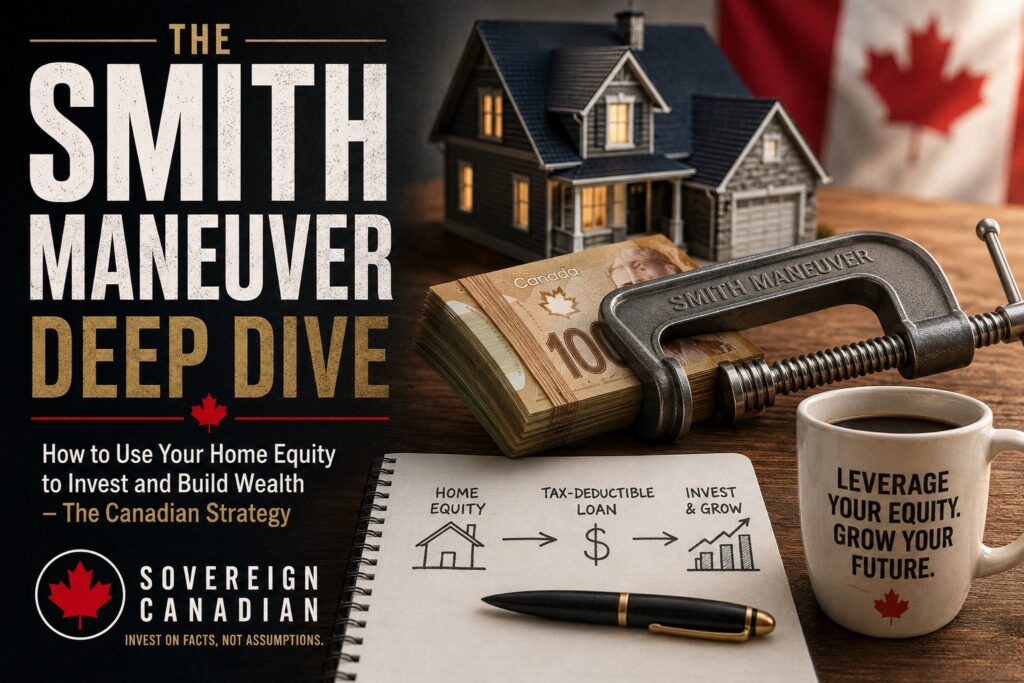
Smith Maneuver  
Use your mortgage strategically – convert non-deductible interest into deductible investment debt while building a personal portfolio.  
This turns your home into a productive asset – without needing to sell or move.

RRSP meltdown strategies  
Instead of deferring until age 71, intentionally withdraw RRSP funds in your 50s or early 60s while your income is lower.  
Pair this with part-time income, TFSA top-ups, or years with heavy deductions (like business losses or childcare expenses).  
The goal is to drain the RRSP gradually at low tax rates before mandatory RRIF withdrawals kick in.

Spousal RRSPs  
Useful when one spouse earns significantly more than the other. The higher-income spouse contributes, but the lower-income spouse withdraws – ideally in retirement when in a lower bracket.  
This spreads income across two individuals, reducing total household tax.

**Attribution Rules:**  
If the lower-income spouse withdraws money within three calendar years of the contribution, the withdrawal is “attributed” back to the contributing spouse and taxed in their hands. To avoid this, plan contributions at least three years ahead of expected withdrawals.

Hard Assets and Strategic Leverage  
Own real estate, hold bitcoin, and build a cash stock portfolio.  
Then, instead of selling and triggering tax, borrow against those assets.

Borrowed money isn’t taxable. You keep your upside, maintain your portfolio, and gain liquidity when you need it.  
Real estate and blue-chip equities can be used as collateral through margin loans or secured lines of credit. Even bitcoin can be collateralized – though more volatility means more risk.

This is how the wealthy stay wealthy: they own appreciating assets, and they use leverage to spend without selling.

You can’t do that with an RRSP.

What Happens When You Die?

If you die with a large RRSP and no spouse, the entire balance is considered income in your final tax year. That could mean 48%+ goes straight to the government.

If you have a spouse and designate them as the beneficiary, the account can roll over tax-free. But when the second spouse passes, the same rule applies – full inclusion as income, big tax bill for the estate.

Spousal RRSPs don’t change this end-game – they only delay it. Planning withdrawals and keeping RRSP balances modest can help manage that final tax hit.

Living Abroad with a RRIF

RRSPs converted into RRIFs don’t disappear when you move abroad – but they come with a new set of tax headaches.

– Canada will apply a 25% withholding tax on RRIF withdrawals for non-residents.  
– That rate may be reduced (often to 15%) under tax treaties.

**Popular countries with favorable RRIF treatment:**  
– Portugal – Often no local tax, 15% Canadian withholding under treaty  
– Mexico – 15% withholding, moderate local inclusion rules  
– Thailand – Often no local tax if offshore income is delayed 1+ year  
– Panama – No local tax on foreign-source income

**Countries where treatment is less favorable:**  
– France – High chance of double taxation, no special treaty handling  
– Germany – May require full inclusion and reporting  
– Japan – Strict global income inclusion rules

Before relocating, consult a cross-border tax advisor to map out how your RRIF will be taxed.

Don’t Just Contribute – Calculate

If your employer matches RRSP contributions? Take the free money. Beyond that? Start modeling.

– What will your tax bracket be when you withdraw?  
– What happens if you retire early? Or move abroad?  
– What does your tax bill look like if you pass away with a large RRSP?

Want to see the numbers? Use this calculator to compare RRSP and TFSA outcomes:  
🔗 https://www.wealthsimple.com/en-ca/tool/rrsp-vs-tfsa-calculator

The sovereign move isn’t to panic – it’s to plan.  
Run the numbers. Own the outcome.

Are you optimizing your future – or just delaying the damage?
Let me know what scenarios you’ve looked at. I’ll share some of my own modeling in a follow-up post.

I bought an AR-15

Over the years of being a firearms enthusiast and activist, I’ve never actually purchased an AR platform rifle. That changed yesterday…

I think the main reason why I hadn’t was due to the obvious impracticality of owning an AR (and really any restricted firearm in Canada). You can’t take it anywhere except to your range, a gun smith, etc. Between moving multiple times, living in apartments, and being too busy with work to spend time at a range, I figured non-restricted firearms are the best use of my money. And I still do.
But really, with all the negative propaganda from the Libtards, now is the time to put my money where my mouth is.
The only cure for firearms ignorance is an increase in the number of law-abiding gun owners, and an increase in the number of theses ‘scary black rifles’ nationwide.

It seems that every time Turdeau, Tory-Dory, or another of the media-seeking attention-whores opens their mouth on gun bans, well the AR-15 supplies nation wide seem to dry up. It sure is sweet, sweet irony that Fidel Jr. has ended up being Canada’s best gun salesman ever. Now with the Covid-19 Corona Virus issue, and the again increased interest in firearms nationwide, I was very pleasantly surprised to see Bullseye had (when I looked) 20 of the Smith & Wesson M&P15 Sport II units in stock:

Bullseye London Link S&W M&P15 Sport II Semi Auto Rifle

Yes there is a very legitimate future risk of bans. Whether that means confiscation, buybacks, grandfathering, or prohibition from using at all remains to be seen. But as an advocate I need to be a participant in the middle of this process.

I will write more on why I chose this as my entry level AR, my initial thoughts, and a review later. But perhaps my new purchase will help to convince me to get out the range more!

No Gun Ban Canada

The propaganda, leftist populism, and ignorant outrage surrounding the discussion on banning handguns in Canada is disappointing – at best.

In looking at my fantastic local gun store: Bulls Eye London (https://www.bullseyelondon.com), I came across the link to a website providing information on how to petition this move and how to make your voice heard.

Please visit: http://www.nogunbancanada.ca

This latest discussion is exactly the slight-of-hand stuff that the Liberals love.  Costs us a lot of money, makes it look like they are solving a problem that was never there, ends up solving nothing, and it only harms us law-abiding Canadians.  And then it costs us more money than they initial led us to believe.

Just say no to a Handgun Ban in Canada.

First Time fishing in Ontario

Tomorrow I am heading up to Lake Simcoe with a couple of buddies to go fishing.
Other than my high-school, backwoods, carp fishing, catch nothing but a buzz days, this is my first time fishing in Ontario.

The plan is to rent a boat and go fishing for bass and pike out on Cook’s Bay.  Not a bad way to spend a day eh.

So I thought I would do myself a favour and look up the regulations, etc.

Here are the good resources I found:

Fishing Limits

Fish ONline – Reference for fish and limits

Ontario Fishing Licence

Hunting and Fishing Licence Issuers


Bill C-42, the Common Sense Firearms Licensing Act

Now that I am finally in the market for a restricted firearm, I had to educate myself on the changes that have recently been introduced regarding the ownership and transportation of them.

There are other aspects of the Act, but of most interest to me is the change to the ATT Authorization To Transport restricted firearms (i.e. handguns, AR-15s, and other guns that are scary mostly cause they are painted black).

Here is the official news:

Effective immediately, these changes to the Firearms Act and the Criminal Code do the following:

  • Make classroom participation in firearms safety courses mandatory for first-time licence applicants;
  • Provide for the discretionary authority of Chief Firearms Officers (CFOs) to be subject to the regulations;
  • Strengthen the Criminal Code provisions relating to orders prohibiting the possession of firearms where a person is convicted of an offence involving domestic violence; and
  • Provide the Governor in Council with the authority to prescribe firearms to be non-restricted or restricted (such prescribing would be informed by independent expert advice).

Within the next several months, upon a date fixed by an order in council, the following changes will come into effect:

  • Creation of a six-month grace period at the end of the five-year licence period to stop people from immediately becoming criminalized for paperwork delays around license renewals;
  • Elimination of the Possession Only Licence (POL) and conversion of all existing POLs to Possession and Acquisition Licences (PALs);
  • Authorizations to Transport become a condition of a licence for certain routine and lawful activities such as target shooting; taking a firearm home after a transfer; going to a gunsmith, gun show, a Canadian port of exit; or a peace officer or a Chief Firearms Officer (CFO) for verification, registration or disposal; and
  • Sharing of firearms import information when restricted and prohibited firearms are imported into Canada by businesses.”

I will update this post with what this actually means when I uncover it.
As I am in the market for a handgun, perhaps my new favourite gun store here in Ontario will fill me in.

Some reference sites:

The RCMP Website

From Parliment

Government Website

CSAAA Canadian Sporting Arms and Ammunition Association